
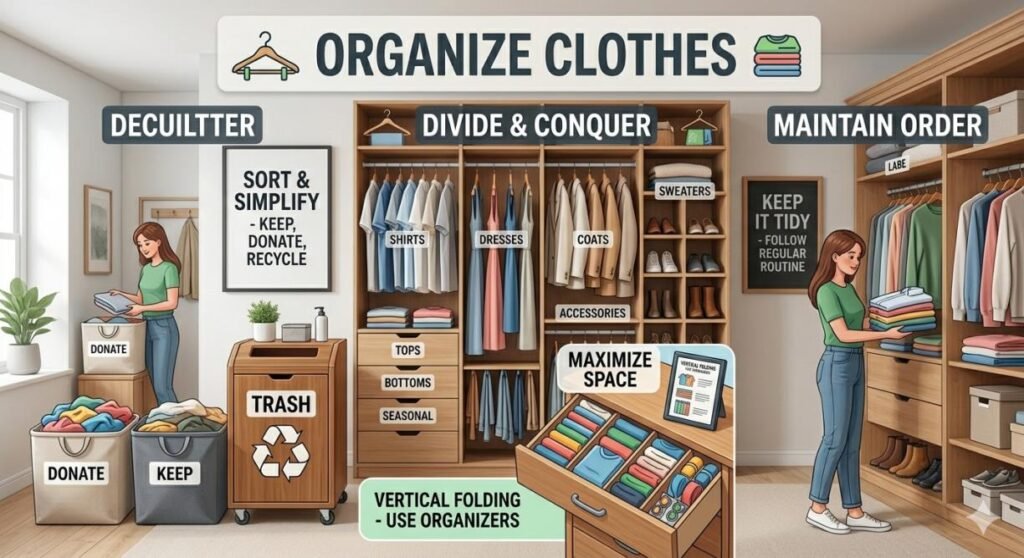
An organized wardrobe is more than just visually pleasing—it saves time, reduces stress, and helps you make better outfit choices. When you know exactly where everything is, your daily routine becomes smoother. Studies on decision fatigue suggest that fewer choices and better organization can improve focus and productivity. That’s why learning how to organize clothes properly can have a real impact on your everyday life.
Step 1 – Declutter Your Clothes First
Start by removing everything from your wardrobe and sorting items into three categories: keep, donate, and discard. Keep clothes that fit well, match your lifestyle, and make you feel confident. Donate items in good condition that you no longer wear, and discard anything damaged beyond repair.
The 1-Year Rule for Clothes
A simple and widely used rule is: if you haven’t worn it in the past year, you probably don’t need it. Seasonal exceptions apply, but this rule helps eliminate unnecessary clutter and makes how to organize clothes much easier.
Mistakes to Avoid While Decluttering
Avoid holding onto clothes “just in case” or because of emotional attachment. Another common mistake is decluttering too quickly without properly evaluating each item. Take your time and be honest about what you truly use.
Step 2 – Categorize Your Clothes
Organizing clothes by category is one of the most effective systems for a neat wardrobe. Keep similar items together such as shirts with shirts and pants with pants for easy access. This simple structure helps you quickly understand how to organize clothes without confusion.
Organizing by Season
Separate your clothes based on seasons like summer, winter, and rainy wear. Store off-season clothes in boxes or under-bed storage to free up space. This method keeps your wardrobe light, practical, and easy to manage.
Sorting by Frequency of Use
Place the clothes you wear most often in the easiest-to-reach sections. Less-used or occasional outfits should be stored in higher or hidden spaces. This makes daily dressing faster and improves it efficiently.
Step 3 – Smart Storage Solutions
Use hangers for shirts, dresses, and wrinkle-prone clothing items. Fold heavy clothes like sweaters to maintain their shape and durability. Drawers work best for smaller essentials like socks and undergarments.
Space-Saving Hacks for Small Closets
Use vertical space by adding hanging shelves or stackable organizers. Slim hangers help you fit more clothes without overcrowding your closet. These small tricks make how to organize clothes easier even in tight spaces.
Best Storage Ideas for Folded Clothes
Fold clothes neatly and stack them vertically instead of piling them. This allows you to see every item clearly without disturbing the stack. It also keeps your wardrobe clean and well-structured.
Step 4 – Organize Clothes for Daily Use
Keep your daily wear clothes at eye level for quick access. Avoid stuffing frequently used items in hard-to-reach areas. This setup saves time every morning when choosing outfits.
How to Plan Outfits in Advance
Planning outfits ahead of time reduces morning stress and confusion. You can even prepare weekly outfit combinations for faster routines. This habit simplifies how to organize clothes and improves efficiency.
Color Coordination Tips
Arrange clothes by color shades from light to dark for visual order. This makes outfit selection faster and more visually appealing. It also adds a sense of harmony to your wardrobe.
Step 5 – Maintain an Organized Wardrobe
Always put clothes back in their proper place after use. Avoid leaving worn clothes on chairs or beds for too long. Small daily habits help maintain it long-term.
Monthly Wardrobe Check Routine
Check your wardrobe once a month to remove unused or unwanted clothes. Reorganize items to keep everything in its proper category. This prevents clutter from building up again over time.
How to Avoid Clutter Coming Back
Follow the “one in, one out” rule whenever you buy new clothes. Remove an old item for every new one you add to your wardrobe. This keeps your closet balanced, clean, and easy to manage.
Bonus Tips for Better Organization
A minimalist wardrobe focuses on keeping fewer but more useful and high-quality clothing pieces. These items can be easily mixed and matched to create multiple outfit combinations. This approach naturally simplifies how to organize clothes and reduces daily confusion.
Budget-Friendly Storage Solutions
You don’t need expensive organizers to keep your wardrobe neat and tidy. Simple items like baskets, cardboard boxes, or DIY dividers can work very well. These affordable solutions make organization easy for everyone.
Quick 10-Minute Closet Reset
Spend just 10 minutes each week to quickly reset and tidy your wardrobe. Put misplaced clothes back and fix any small clutter spots immediately. This habit prevents mess from building up and supports how to organize clothes long-term.
Common Mistakes to Avoid
Holding onto clothes you rarely wear only creates unnecessary clutter in your closet. These items take up valuable space and make organization more difficult. Letting them go is important for a clean and functional wardrobe.
Ignoring Seasonal Rotation
Not rotating clothes based on seasons leads to overcrowded and messy storage. It becomes harder to find what you actually need in daily use. Seasonal rotation is a key part of learning it properly.
Overstuffing Your Closet
Overfilling your closet damages clothes and makes everything harder to access. It also reduces visibility, making outfit selection stressful and slow. A well-spaced wardrobe is always easier to maintain and manage.
Final Verdict
Learning how to organize clothes doesn’t require complicated systems or professional help. It starts with simple steps like decluttering, sorting, and creating a clear structure in your wardrobe. When you stay consistent with organizing habits, your closet naturally becomes easier to manage. A clean and organized wardrobe helps you save time and reduces stress in your daily routine. It also allows you to see your clothes clearly, making outfit selection faster and smoother.