
Introduction
If you’ve ever searched for better ways to organize your work, plan content, manage projects, or build a personal knowledge system, you’ve probably heard of Notion. But what makes Notion truly powerful is the community around it—people sharing templates, workflows, and real-life lessons. That’s where NotionBlogs comes in.
NotionBlogs: Dive into the World of NotionBlogs.com is more than a title—it’s exactly what you’ll do here: explore a space built for curious learners, Notion users, creators, and productivity enthusiasts who want practical ideas they can use immediately.
What Is NotionBlogs.com?
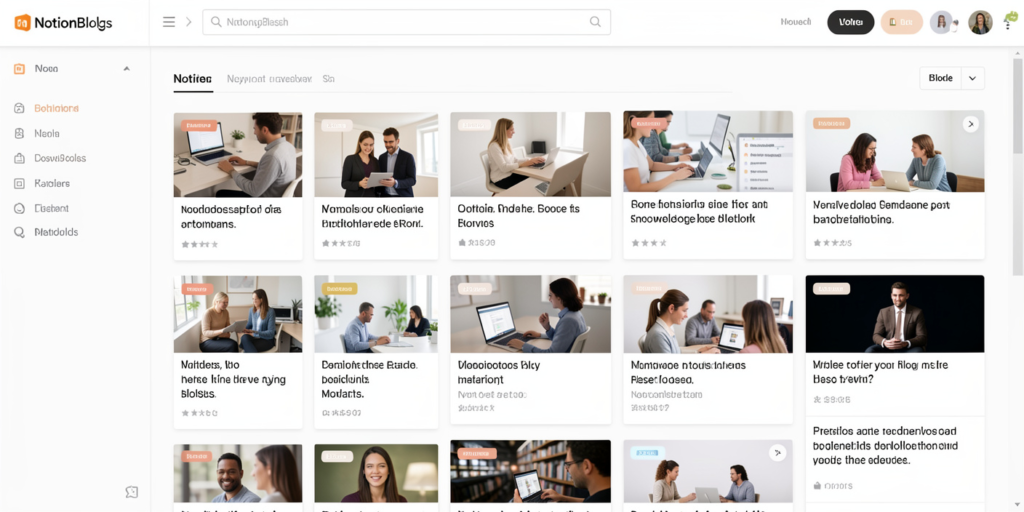
NotionBlogs.com is a content hub focused on Notion-related knowledge—think tutorials, best practices, workflow ideas, template inspiration, and productivity strategies. It’s designed to help users go beyond “basic Notion pages” and build systems that actually support their goals.
Instead of random tips scattered across the internet, Notion Blogs organizes ideas in a way that’s easier to follow and apply—whether you’re a beginner setting up your first dashboard or a power user building a full content engine.
Mission and Goals of Notion Blogs.com
The mission of NotionBlogs is simple: make Notion easier, smarter, and more useful for real people. Its goals typically include:
- Helping users learn Notion faster with clear, step-by-step content
- Sharing practical workflows that improve daily productivity
- Highlighting template ideas for different lifestyles and industries
- Building a supportive space where users can learn from each other
- Encouraging creators to contribute their own systems and experiences
At its core, NotionBlogs exists to turn “Notion confusion” into “Notion confidence.”
The Community Behind Notion Blogs
A blog is only as valuable as the people who keep it alive. The strength of NotionBlogs is its community—students, freelancers, startup teams, creators, and productivity geeks who love sharing what works (and what doesn’t).
What makes a community like Notion Blogs special is the variety of perspectives:
- A student might share a study planner that actually reduces stress
- A freelancer might post a client management system
- A creator might show how they plan content, scripts, and publishing
- A team might share a simple project tracker that keeps everyone aligned
That mix creates a library of ideas that feels real—because it comes from real use.
How to Get Involved with Notion Blogs
Getting involved with NotionBlogs doesn’t require you to be an “expert.” You can start small and grow into it:
- Read and apply: Use articles to improve your own Notion workspace
- Comment and share feedback: Engage with what you found helpful
- Submit an idea: Even a small workflow tweak can help someone else
- Share a template or layout: Templates don’t need to be complicated to be valuable
- Suggest topics: If you’re stuck on something, chances are others are too
The easiest way to join the Notion Blogs ecosystem is to treat it like a learning loop: read → test → improve → share.
Utilizing Notion Blogs for Development
“Development” here can mean personal development, skill development, or even business development. NotionBlogs can support all three by helping you build systems that reduce chaos and increase clarity.
For example, you can use Notion Blogs to:
- Build routines that stick (habit trackers that don’t feel like homework)
- Create learning dashboards (courses, notes, projects, revision systems)
- Run a content calendar (blog posts, YouTube, TikTok, newsletters)
- Track goals with measurable progress (weekly reviews, KPI tracking)
- Manage projects with less stress (simple boards, timelines, and checklists)
When your systems are clear, progress becomes easier—and that’s the real “development” benefit of Notion Blogs.
Benefits of Reading Notion Blogs
Reading NotionBlogs consistently can save you hours of trial and error. Instead of building everything from scratch, you learn proven ways to set up pages and workflows.
Here are the biggest benefits:
- Clarity: You stop guessing and start building with purpose
- Speed: You get setup ideas that work quickly
- Consistency: Better systems lead to better habits
- Creativity: You discover new layouts and ways to connect information
- Confidence: You feel in control of your workspace instead of overwhelmed
Common Use Cases for NotionBlogs
Here are five common ways people use Notion Blogs content:
- Personal Productivity Dashboards: A clean homepage with tasks, goals, habits, and daily planning—without clutter.
- Content Creation Systems: Organizing ideas, outlines, drafts, publishing schedules, and repurposing workflows.
- Student Study & Revision Workflows: Notes, flashcards, assignment trackers, semester planning, and exam prep.
- Freelancer or Client Management: Project pipelines, proposals, deadlines, deliverables, payments, and meeting notes.
- Business Planning & Team Collaboration: SOPs, project tracking, team docs, onboarding pages, and knowledge bases.
These use cases show why Notion Blogs appeals to almost anyone who wants structure.
Resources and Tools for NotionBlogs Users
A great blog doesn’t just explain ideas—it equips you with tools. A platform like NotionBlogs usually becomes more helpful when it also offers resources such as:
- Notion template suggestions (free and premium)
- Workflow checklists and beginner guides
- Database setups (content trackers, CRM, habit systems)
- Writing frameworks for documentation and note-taking
- Notion feature breakdowns (relations, rollups, views, filters)
Even if you’re not downloading templates, learning how they are structured can massively upgrade how you build your own workspace with Notion Blogs guidance.
Contributing to the Notion Blogs
Contributing to NotionBlogs can be as simple as sharing one helpful system. If you’ve built something that improved your life—share it. Contributions can include:
- A tutorial post (how you built a system step-by-step)
- A workflow breakdown (what you do weekly and why it works)
- A template link with instructions
- A case study (your before-and-after productivity results)
- Tips for a specific niche (students, creators, remote workers, etc.)
If your content is honest and useful, it belongs in Notion Blogs.
Best Practices for Blog Contributions
If you want your post to stand out in NotionBlogs, these four practices will keep your writing clear, valuable, and easy to read:
- Write for one person, not everyone: Choose a specific reader: beginner student, freelancer, creator, etc. Your post becomes more helpful when it’s focused.
- Explain the “why” before the “how”: Don’t jump straight into steps. Start with the problem and explain why your solution works.
- Use real examples and screenshots (if possible): People learn faster when they see what the final result looks like.
- Keep it simple and actionable: Avoid fancy words. Use short paragraphs, clear steps, and quick takeaways.
These practices help your content feel human—and make Notion Blogs stronger for everyone.
Success Stories from NotionBlogs Community
Communities like NotionBlogs grow because people get results. Success stories usually look like this:
- A student organizes their semester and stops missing deadlines
- A freelancer builds a simple client tracker and saves hours weekly
- A creator builds a content system and finally posts consistently
- A startup team creates SOPs and reduces repeated mistakes
- Someone overwhelmed by life builds a “second brain” and feels calm again
What’s powerful is that these are not “perfect life hacks.” They’re small improvements that compound—and Notion Blogs is often the starting point.
Final Verdict
If you want a smarter way to learn Notion, get workflow ideas, and discover practical systems you can actually use, NotionBlogs is a solid place to explore. It brings clarity to Notion, organizes helpful knowledge, and connects you to a community that enjoys sharing what works.
Whether you’re just starting out or refining advanced setups, Notion Blogs can help you build a Notion workspace that supports your goals—without the overwhelm.