
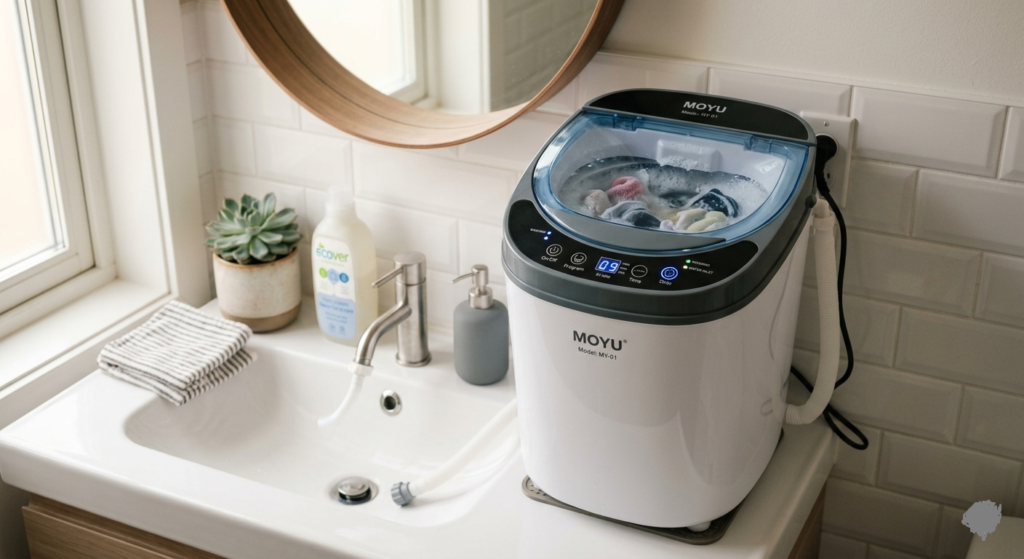
Laundry appliances have evolved significantly over the years, and one of the most practical innovations is the mini washing machine. Designed for people who have limited space or smaller laundry needs, these compact appliances offer convenience, efficiency, and affordability. Whether you live in a small apartment, a college dorm, an RV, or simply want a secondary washer for delicate clothes, it can be an excellent investment.
As urban living spaces continue to shrink and energy efficiency becomes increasingly important, more consumers are turning toward compact laundry solutions.
What Is a Mini Washing Machine?
It is a compact laundry appliance designed to wash smaller loads of clothing. These machines are generally lighter, more portable, and easier to install than traditional washers.
They are especially popular among:
- Apartment residents
- College students
- RV owners
- Travelers
- Small households
- People needing a backup washing solution
Despite their compact size, many modern models offer impressive cleaning performance and practical features.
Types of Mini Washing Machines
Portable models are lightweight and easy to move. They can often connect directly to a sink faucet and are ideal for temporary living arrangements.
Twin-Tub: These models feature separate washing and spinning compartments. Users manually transfer clothes between tubs, but they are generally affordable and energy-efficient.
Fully Automatic: These units perform washing, rinsing, and spinning automatically, offering convenience similar to full-sized washers.
Foldable: Designed primarily for travelers, foldable units can collapse for easy storage and are suitable for washing lightweight clothing.
Mini Washing Machine vs Traditional Washing Machine
Many buyers wonder whether a compact washer can truly compete with a standard-sized model. The answer depends on your laundry requirements.
| Feature | Compact Laundry Machine | Traditional Washing Machine |
| Size | Compact | Large |
| Capacity | Small Loads | Large Loads |
| Water Usage | Lower | Higher |
| Energy Consumption | Lower | Higher |
| Portability | High | Low |
| Price | More Affordable | More Expensive |
| Installation | Easy | Permanent Setup |
Benefits of Using a Mini Washing Machine
One of the biggest advantages is its compact footprint. Many people today live in apartments or studio spaces where every square foot matters.
These machines fit easily into:
- Bathrooms
- Kitchens
- Closets
- RVs
- Tiny homes
Lower Water Consumption
Environmental awareness has become a major purchasing factor. A mini washing machine typically uses far less water than a traditional unit.
This reduction helps:
- Lower utility bills
- Reduce environmental impact
- Support sustainable living
Energy Efficiency
Most compact washers consume less electricity because they handle smaller loads and require less power to operate. Over time, this can translate into significant savings on monthly utility expenses.
Portability and Convenience
Unlike bulky traditional appliances, many compact models can be moved whenever needed.
This makes them ideal for:
- Renters
- Students
- Frequent movers
- Seasonal travelers
Affordable Laundry Solution
Purchasing usually costs considerably less than buying a full-sized washer. Maintenance expenses are often lower as well. For budget-conscious consumers, this affordability can be highly attractive.
Who Should Buy a Mini Washing Machine?
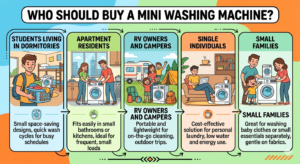
Students Living in Dormitories: Students often lack access to private laundry facilities. A compact washer allows them to wash clothes conveniently without visiting laundromats.
Apartment Residents: Limited space is a common challenge in apartment living. A mini washing machine provides an effective solution without requiring dedicated laundry rooms.
RV Owners and Campers: Travel enthusiasts appreciate portable laundry options that help them remain self-sufficient during long trips.
Single Individuals: People living alone generally produce less laundry. A smaller washer can efficiently handle their needs without wasting resources.
Small Families: Families with one child or minimal laundry requirements may find a compact washer sufficient for daily clothing loads.
Key Features to Look for in a Mini Washing Machine
Choosing the right model requires careful evaluation of several important features. Capacity determines how many clothes can be cleaned during one cycle.
Common capacities include:
- 3–5 lbs for personal use
- 6–10 lbs for couples
- 10+ lbs for small families
Select a machine based on your weekly laundry volume.
Automatic vs Semi-Automatic Operation
Fully automatic machines require minimal user involvement, while semi-automatic models demand manual transfer between washing and spinning compartments. Automatic units offer convenience, whereas semi-automatic models often cost less.
Spin-Drying Function
A strong spin cycle removes excess moisture and reduces drying time. This feature becomes particularly valuable in humid environments where clothes take longer to air dry.
Water Efficiency
Look for models specifically designed to minimize water consumption without sacrificing cleaning performance.
Noise Levels
Some compact washers operate more quietly than others. If you live in a small apartment or share living space with roommates, quieter operation can significantly improve comfort.
Build Quality and Durability
A reliable small washing device should feature durable materials and strong construction.
Look for:
- Rust-resistant components
- Sturdy plastic or metal housing
- Quality motor systems
- Positive customer reviews
Drainage Options
Ensure the machine’s drainage system matches your living setup. Portable models often include flexible drain hoses that can be directed into sinks, tubs, or floor drains.
How to Choose the Best Mini Washing Machine
Assess Your Laundry Needs
Start by estimating how much laundry you wash each week.
Questions to consider:
- How many people will use it?
- How often do you do laundry?
- Do you wash bulky items regularly?
Measure Available Space
Carefully measure your installation area before purchasing.
Consider:
- Width
- Height
- Depth
- Access to water supply
- Drainage availability
Set a Realistic Budget
Compact washers are available at various price points.
Generally:
- Entry-level models: Budget-friendly
- Mid-range models: Better features
- Premium models: Advanced automation and durability
Read Customer Reviews
Real-world experiences often reveal information that specifications cannot.
Focus on reviews discussing:
- Reliability
- Cleaning performance
- Ease of use
- Customer support
How to Make Effective Use of a Small Washing Machine
Getting the best results requires proper usage. Start by sorting clothes according to fabric type and color. Avoid overloading the drum, as this can reduce cleaning performance and place unnecessary strain on the motor.
Use the recommended amount of detergent because excessive soap can leave residue on clothes and inside the machine. For delicate garments, select gentle wash settings whenever available. Following these simple practices can improve washing results while extending the life of your appliance.
Mini Washing Machine Maintenance Tips
Regular maintenance helps ensure you continue to perform efficiently for years.
Clean the Drum Regularly: Wipe down the drum after use and run a cleaning cycle periodically to prevent dirt buildup.
Prevent Mold and Odors: Leave the lid open after each wash so the interior can dry completely. This reduces moisture that can cause mold and unpleasant smells.
Inspect Hoses and Connections: Check water hoses and drainage pipes regularly for leaks, cracks, or blockages.
Store Properly: If you own a portable unit, store it in a dry location when not in use.
Avoid Overloading: Consistently overloading the machine can shorten its lifespan and reduce washing effectiveness.
Pros and Cons of a Mini Washing Machine
Advantages
- Compact and space-saving
- Uses less water and electricity
- Easy to move and store
- Lower purchase cost
- Ideal for apartments, dorms, and RVs
Disadvantages
- Smaller load capacity
- Not suitable for large bedding items
- Some models require manual operation
- Longer overall laundry time for bigger households
Conclusion
A mini washing machine is an excellent solution for anyone seeking a compact, affordable, and efficient way to handle everyday laundry. Whether you live in a small apartment, college dorm, RV, or tiny home, these machines offer convenience without requiring significant space or resources. By understanding key features such as capacity, portability, energy efficiency, and washing performance, you can confidently choose the model that best fits your lifestyle.
FAQs
Q1: Is it effective at cleaning clothes?
Ans: Yes, modern it can clean everyday clothing effectively when used according to the manufacturer’s guidelines.
Q2: How much laundry can it handle?
Ans: Capacity varies by model, but most units can wash between 3 and 12 pounds of laundry per cycle.
Q3: Can a mini washing machine wash blankets?
Ans: Small blankets and lightweight bedding may fit, but large comforters and heavy blankets often exceed the machine’s capacity.
Q4: Does it save electricity?
Ans: Yes, they generally consume less electricity than traditional washing machines because of their smaller size and reduced load capacity.
Q5: Is it suitable for apartments?
Ans: Absolutely. Their compact design makes them one of the best laundry solutions for apartment living.